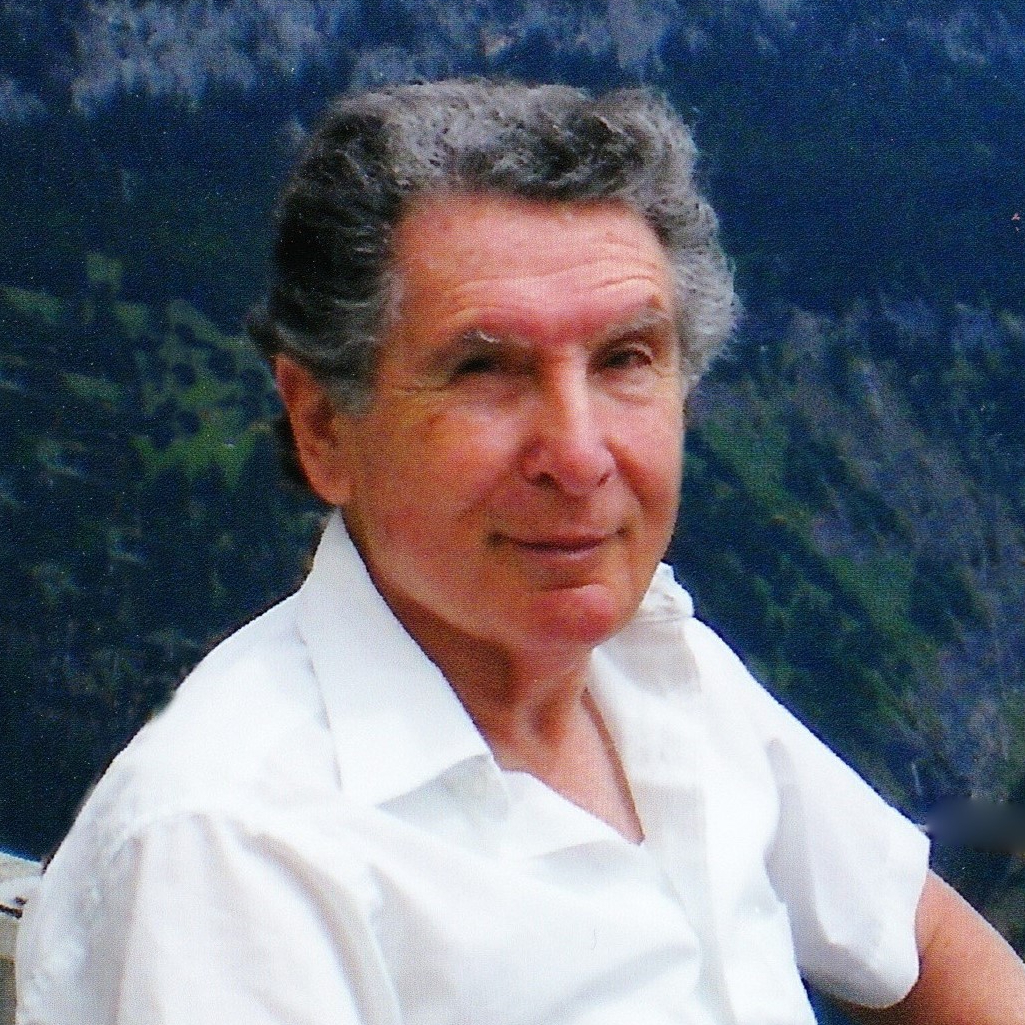
This is the transcript of a lecture I gave at the Saint Francis Episcopal Church of Potomac, Maryland on May 11, 2022
Subject: My book The Illusion of Safety – The Story of the Greek Jews During the Second World War
I was born in the city of Ioannina in 1930. My father was an employee of the National Bank of Greece. When I was five years old, my father was transferred to the city of Arta where my sister Ninetta was born. We left behind 126 close relatives who were later murdered by the Germans. Fortunately, I did not know them well and my sister did not know them at all. But for our parents their deep pain, which they tried to hide from us, remained until the day they died.
In 1940 my father was transferred to the city of Agrinio which had only 40 Jews. According to the historian Ladislas Farago, that same year, in October 1940, Hitler, the Chancellor of Germany, decided to launch an attack against Moscow and Russia and expected to conquer them as easily as he had conquered Paris and France. But first, he had to conquer Greece, before he launched an attack against Russia.
The Fascist Mussolini of Italy, an ally of Hitler, after he occupied Albania in the north of Greece, he believed that the Fascist Prime Minister of Greece, Ioannis Metaxas, would allow him to occupy Greece. But Metaxas said his famous NO.
Suddenly, on October 28, 1940, superior Italian forces attacked Greece. The Greek army retreated in panic except for the forces of Colonel Mordechai Frizis. An order was given to evacuate the families of military officers who were in Ioannina, a city close to the Greek Albanian border. The evacuation was disorganized. Three families arrived in Agrinio and went to my father in the bank. He placed the Frizis family in our house and he put the wives of two military doctors and their two little boys in a room in the bank.
It’s a small world! A few years ago, I met again these little boys right here in Washington. One of them, Dr. Alex Levis, was a professor at George Mason University and a consultant to the Pentagon with the rank of a three-star General! The other was the Greek Ambassador to the United States!
Colonel Mordechai Frizis, a Greek Jew, and his troops were stationed at the Albanian frontier. He expected an Italian attack. Long before the war started, Colonel Frizis had prepared a plan for the expulsion of the enemy and had submitted it to the chief of staff of the Greek army General Papagos. General Papagos had approved the plan of Colonel Frizis. So, when the Greek army retreated, Colonel Frizis and his troops implemented his plan. They defeated the Italians in their sector and entered Albania.
The victory of Frizis stopped the retreat. The Greek army regained its enthusiasm, counterattacked and occupied one third of Albania. Colonel Frizis was killed while leading his troops on his horse in the front line. He was buried in the Albanian soil by his orderly, Moshe Matsas, a first cousin of my father. Prime Minister Metaxas and General Papagos gave Colonel Mordechai Frizis the greatest honors, erecting marble busts and extending warm condolences to his family.
The Greek army remained in Albania until April 1941. Germany could not wait any longer for the conquest of Greece by Italy and on April 6, 1941 Germany attacked Greece. The pro- German Greek generals capitulated, and the Greek soldiers were demobilized and went home.
After Germany occupied Greece including the British defended island of Crete, they were ready to attack the Soviet Union. The attack started on June 22, 1941. By the time the German troops reached Moscow, it was winter. They had to fight the Russians in subfreezing weather while they were still dressed in summer uniforms. The Germans were defeated.
The German Field Marshal Wilhelm Keitel said, “The unbelievably strong resistance of the Greeks delayed by two or more vital months the German attack against Russia. If we did not have this long delay, the outcome of the war would have been different in the Eastern front and in the war in general.”
Two Greek historians attribute the Greek victory to Colonel Mordechai Frizis, a Greek Jew. The Greek historian Anastopoulos wrote, “Frizis executed a tremendous counterattack without which the victory of 1940 would not have been realized.” The Greek historian Simopoulos wrote, “The honor of the most glorious victory in the entire front belongs to the military tactics of Colonel Frizis.”
When I read these statements, one by Field Marshal Keitel, an enemy general, and the others by two Greek historians, my admiration for Colonel Frizis rose to astronomical heights. Frizis, by his heroic death on his horse in the front line, is elevated to the status of a mythical Greek hero and one of the greatest heroes of the Second World War. Professor Emeritus of the University of Cincinnati and a well-known historian Dr. Steven Bowman told me, “You made a fantastic contribution to the Jewish people.”
While the battle for Moscow was raging, Turkey an ally of Germany during World War I, was watching and waiting. If the Germans succeeded in capturing Moscow and knocked Russia out of the war, the three million strong Turkish army would have joined the Germans. Such an alliance would surely have led to a German victory in Europe. The Ottoman empire would have likely been reestablished and Greece would have been enslaved by Turkey once more. Israel would not have been born. Countries like Spain, Portugal, Argentina, Brazil and others would have joined Germany, and Hitler’s dream of a one-thousand-year Reich would not have remained a horror dream but would have become a cruel fact.
Greece was divided into three zones of occupation, German, Bulgarian, and Italian. The city of Agrinion where my immediate family and I lived was in the Italian zone. The Italians in Greece behaved in a very civilized manner, and they helped the Jews.
In 1941, the United States had diplomatic relations with Germany. The military attache of the American embassy in Berlin reported that in every Russian city the Germans occupied, the first thing they did was to arrest all the Jews, take them out of the city, and kill them. We, in Greece, knew nothing about this. In Greece there was strict censorship, and our only source of reliable information was the BBC (British Broadcasting Corporation) radio broadcasts in Greek from London at 8:00pm every evening. Everyone who had a hidden radio would listen to it.
The Allies knew what the Germans were doing to the Jews, but they decided NOT to mention even once in their Greek broadcasts that the Germans were killing millions of Jews in Europe. I have a personal letter from Mr. Nathaniel of the BBC of London who certified that, “All broadcasts in Greek during World War II were examined and nothing was mentioned related to the Jews.” This lack of information is responsible for the loss of more than 67,000 Greek Jews, over 86% of the Greek Jewish population, and the suffering of 2,000 Jews who survived the concentration camps.
During the first two years of the occupation, 1941 and 1942, we in Agrinion, and the people in the Greek countryside had plenty of food. But the people in the big cities like Athens and Thessaloniki that had 56,000 Jews, were starving. Movement from the cities to the countryside was allowed by the occupying forces. So, tens of thousands of people would go to the countryside to buy food.
If the Jews of Greece knew by listening to the radio that the Germans were killing the Jews just because they were Jews, they could have gone to the most remote mountain villages that had no roads and stay there. Even the poorest Jews could take enough used clothing to exchange for food and survive. There were over 30,000 former Greek Jewish soldiers who could protect their families just with knives and kill any Greek traitors who attempted to betray Jews to the Germans. The Germans had no way of knowing who was a Jew. The Greek Jews would have preferred to die protecting their families in Greece rather than die in Auschwitz.
In March 1943, we heard that some Jews from Thessaloniki were deported to Poland. We were wondering, what did they do to the Germans? By that time over three million Jews throughout Europe had already been murdered.
Back in Agrinion – One day a villager came to our house with a horse load of wheat that my father had bought. He said, “In this bag there is a gun and ammunition for your friend Christos Bokoros.” Christos Bokoros was a leader of the resistance. My father put the gun and the ammunition in a basket with other items and told me, “Go from the back streets.” I, a 13- year- old enthusiastic boy, decided to go from the main street and even touched an enemy soldier as I was passing. I knew that what I was doing was dangerous, but I did not feel any fear at all.
In September 1943, Italy capitulated. The Germans came to Agrinion, but they did not bother anyone. The forty Jews of Agrinion decided not to obey any German anti-Jewish regulations. We would flee to the mountains. My father requested and received permission to go on vacation at a moment’s notice. However, we continued to remain in the comfort of our homes.
At the end of September 1943, a Jewish merchant went to Athens to buy merchandise for his shop. He went to three big Jewish shops. They were closed. He immediately returned to tell us what he saw. Yonas Mionis, a teacher and a leader of the resistance said, “This is not a good sign. Tomorrow morning, I am going to the mountains.” All the Jewish families agreed to do the same. My parents packed in water- proof bags, supplies we would need, and gave extra food supplies to the bank and our friends for safekeeping.
My father did not know where to go. He asked Bokoros, to whom I gave the gun. Bokoros said, “Come right away with your supplies to my home.” We did, and the next morning a taxi came and took us out of the city. The road ended in the village of Houni, 25 miles outside of Agrinion. There, we rented two horses and a donkey and after a three-hour hike through a forest we arrived at the picturesque village of Psilovrahos.
All the villagers were organized in the resistance. We told them that we were Jews escaping from the Germans. We rented a room and we started a new kind of life. We felt we were in some kind of a lovely vacation. My mother learned from the village women the things she needed to know to run a household in a village that lacked the facilities of the city, and she in turn taught them embroidery, dress and lace making. We had plenty of money to buy meat and other food supplies.
One day a member of the resistance told us that a strong German force was coming, and they arranged for us to go to the remotest house in the mountain. The owner of the house showed us a nearby cave in case of need. It had beautiful stalactites and stalagmites. (I showed the audience a fragment of a stalactite that I have from 1943.) After six days, the Germans returned to Agrinion and we returned to our village.
My father arranged with a villager to go to Agrinion and bring us food provisions. He came back with olive oil, sugar and flour. He also told us that two days after we left the city, two Germans went to the bank to see my father. They were told that he was on vacation. Soon the situation in the city became dangerous and no one was going there anymore.
We did not have enough food, and our money lost its value to buy anything. The village women taught my mother how to make a pie with wild plants to stop the hunger and preserve our food supplies. Every day, using a knife I would collect dandelions which mixed with flour and olive oil, would make a pie that my father baked in a clay oven he built himself.
By March 1944, our food situation worsened. Mother became very concerned, and she wanted to go with me to the city to bring food supplies. Father and I thought it was very dangerous. Mother insisted and so one day she left for Agrinion by herself. Three days later she came back extremely tired and very agitated. She told us that on her way to the city she met my teacher, Mr. Svolis, who told her that the Jews of Ioannina, Arta and Preveza had been arrested and were brought to a tobacco warehouse of Agrinion. Despite the bad news, Mother insisted on continuing her trip to Agrinion. Mr. Svolis told her to go to the village of Camaroula and ask his godfather, who was the teacher of the village, to go to Agrinion with his horse and bring food supplies. Mother met Mr. Svolis’ relative in Camaroula. He went into the city and came back with a few tablets of quinine and sugar in small bags, which he carried in his pockets. It was too dangerous to take food out of the city on his horse.
The news was devastating. We became extremely upset and angry not only against the Germans, but also against the Jewish leaders and our own relatives, who did not listen to my father’s advice to leave the city. Finally, my father said, “There is still hope if we let the Allies know about the arrest of the Jews.” In two days, Mother and I went to the village of Prianza where we met the head of the British Military Mission. He was a kind Major who promised to send a radio message to London.
British parachute drops with weapons and uniforms for the partisans were made in Prianza. The villagers collected the parachute cloth and had plenty of it. Mother and I went around like beggars collecting parachute cloth. My mother’s plan was to make shirts and dresses and exchange them for food. It was our good fortune that a partisan unit came and camped in Psilovrahos for over 20 days. Father explained our dire situation, and they agreed to give us the portion of food of one partisan every day. We divided the portion into four and saved our own limited supplies.
During harvest time, when food was plentiful, we exchanged the shirts and dresses that Mother made for food and gathered enough food even for the next year.
In September 1944, the Germans left Greece. We thanked the people in the village who helped us and prepared to leave the house where we had lived for a year. By the way, some of the stones were carved with beautiful designs from a higher civilization that flourished there 2000 years earlier. We have a photograph of these stones. Include the photo of the stones.
On October 3, 1944, we returned to Agrinion. My year in the mountains was not a wasted year. It taught me a most important lesson. It taught me how to live a meaningful life. I realized that what had happened to us was of historic value, and, at age 14 I wrote a very long, detailed essay which I called “One Year in the Mountains”. When my father read my essay and saw how I admired the idealistic partisans and loved their songs, he created a hiding place for it under our heavy dining room table. He wanted to protect me. He explained to me that in Greece after the war the collaborators of the Germans with the help of the police and the courts executed, imprisoned, and exiled many of the people who fought the Germans.
In 1948 I took an examination to enter Dental School. There were 820 candidates for 30 positions. I was number 17. In 1953 I became a dentist and served in the army as a reserve officer for three years. I was promoted to the highest position for a reserve officer and was assigned as a dentist of the Military Academy of Athens. In 1956 I applied and was accepted as a postgraduate student by Georgetown University Dental School.
During my first ten days in New York and Washington, I fell in love with America and its people. I decided to make this great country my family’s country. I accepted the torture of becoming a student again in a foreign language for another four years. My sister Ninetta came in 1959. I was married to my lovely Eleanor in 1960, and my parents came in 1963.
All these years, the fact that we lost 126 close relatives so needlessly never left my mind. I knew that antisemitism, hate against the Jews was at the heart of the Holocaust, the murder of six million Jews. I read many books on the subject. These are the most important statements on the subject by members of the clergy that I found:
Pope John XXIII declared: “Not all the Jews at the time of Jesus were responsible for his crucifixion and certainly the Jews of today are not responsible for his crucifixion.”
Pope Paul II said, “We cannot possibly not recognize the betrayal of the Gospels which brothers of ours committed especially in the second millennium”.
In the book, “Hitler’s Pope,” by Jon Cornwell, Pope Pius XII signed the “Reich Concordat,” a treaty with Hitler, which insured that the Nazis would rise unopposed to power. This treaty, by Hitler’s own admission, sealed the fate of the Jews in Europe.
The Episcopalians declared that the biggest mistake that the Church made in the 2000 years of its history was its treatment of the Jews.
Judy Montagu wrote in her book, Where God Stood in the Holocaust,” The Holocaust was just the latest in a long chain of Jewish suffering and death resulting from persecutions stretching back through the centuries in so many places where the Jews have tried to live their lives in peace. One book that brought this grim reality home is called The Foot of Pride. In it, the English clergyman Malcolm V. Hay chronicles 1,900 years of almost unrelenting Christian demonization of Jews. It is heartbreaking to read about the careful tending of the toxic soil in which the seeds of genocide developed.”
The same question, “Where was God during the Holocaust?” is answered by Professor Daniel Goldhagen, in his book Hitler’s Willing Executioners. He wrote, “The answer can be found in the widespread, profound, and virulent anti-Semitism based on the traditional religious enmity of Jews. The German Protestant and Catholic churches, their bishops and their theologians watched the suffering that the Germans inflicted on the Jews in silence.”
Hitler, the leader of Germany, was a good politician. He wanted to do what the German and Austrian people wanted. He took advantage of the anti-Semitism that existed in Germany for many centuries. Two examples of his flexibility are the following: When they removed the crosses from schools in Bavaria and the people protested, the crosses came back. When the Jewish spouses in intermarriages were arrested and the Christian spouses protested, their spouses were released.
Herman Goering, the head of the German Air Force, had as his second in command a Jew, Field Marshal Erhard Milch. When someone complained, Goering replied, “I decide who is a Jew.” The German Jews were more patriotic Germans than the Christian Germans. The highest decoration in the German army is the Iron Cross. During the First World War 18,000 German Jews earned the Iron Cross. Many of them committed suicide with their spouses rather than submit to the humiliation of their arrest by the German police.
It is estimated that 1/3 of all German expenses for the Second World War was paid with looted Jewish assets.
Hitler wrote, “Anti-Semitism is a useful expedient. It is the most powerful weapon in my propaganda and of deadly efficiency.”
The deportations of the Greek Jews started in March 1943, when three million of the Jews of Europe were already dead. This was known even in the American newspapers, while nobody in Greece knew about it. These deportations continued in Greece for more than a year until they finally ended on July 20, 1944, just two months before the Germans left Greece.
It looks to me as if the Jews of Greece were patiently waiting in their homes, in their cities for over a year their turn to be killed by the Germans, the most civilized people of the world. I became furious. I wanted to know what happened and who were the people responsible for it.
At this point, before I continue, I want to express my profound love and gratitude to the American people – to those who fought as members of the Armed forces of the United States, to the 400,000 who were killed, and to those who were wounded and their families, and to those who contributed to the war effort, in the merchant marines, on the farms, and in the factories.
In the American archives I found 500 pages of documents related to the Greek Jews. What I discovered in the archives, as well as in books and articles, was very painful to me. The two people who are indirectly responsible for the loss of the Greek Jews, were men whom I respected and admired for so many years, President Franklin D. Roosevelt and Prime Minister of Great Britain, Winston Churchill.
Professor Richard Breitman in his book, Official Secrets, What the Germans Planned — What the British and the Americans Knew, writes that the British broke the German code of the German Order of Police that dealt with the Jews in September 1939. The Allies knew everything the Germans were doing to the Jews. In the 330 pages of the book, he writes that the Allies knew, for example, how many Jews were arrested in a city, who was the commander in charge, how many soldiers he had, and what was the final destination of the victims where they were killed.
Professor David Wyman in his book, The Abandonment of the Jews, writes, “The United States and Great Britain were deeply committed to a policy of NOT rescuing the Jews. Antisemitism was widespread and the State Department was actively blocking information about the genocide and deliberately obstructed rescue efforts. A fact that particularly pains me as a Christian, is that the American churches were largely silent.”
Greek historian Iasonas Handrinos describes in his book, published in 2020, how he found a letter in the National Archives of England written by Prime Minister Winston Churchill in which Churchill wrote, “Perhaps it is preferable for us if the Greek Jews, rich or poor, remain in the hands of the Germans.”
In a tribute to the late Bernard Kalb by Bart Barnes, published by the Washington Post on January 9, 2023 (which I read after I gave this lecture), there is the following quotation by Winston Churchill, “In time of war, the truth is so precious, it must be attended by a bodyguard of lies.” To this statement I would add, “or silence.” This supports my belief that the silence of the BBC of London about the Holocaust is responsible for the death of most of the 67,000 Greek Jews. I would have liked to ask Mr. Churchill the question, “Who were his enemies, the Germans or the Greek Jews?”
In the United States, John Pelle, director of The War Refugee Board, accused the State Department of keeping important information about the Holocaust from the American people. Officials of the Treasury Department exposed this “dirty scandal”, as they called it, in a report under the title “Acquiescence of this Government in the Murder of the Jews of Europe”. The head of this Government was President Roosevelt.
I believe that in protest against the anti-Semitism of his illustrious ancestor, the great grandson of President Roosevelt, Joshua Boettiger, became a Rabbi. Rabbi Joshua Boettiger wrote about President Roosevelt, “If he knew about the slaughter of the Jews in Europe, and he did not act, that is very serious, inexcusable”.
In the American Archives the document that impressed me the most, is a document sent on May 2, 1944 to the State Department by the American Consul Burton Berry of Istanbul, Turkey. This is a document that could have saved 1,813 Jews of Corfu. The document stated, “Michael Boyiadjoglou, a tobacco merchant, was traveling first class from Athens to Istanbul on April 30, 1944. He met three German SS officers. He was fluent in German. They told him that they were going to Corfu to deport the Jews. They left the train in Larissa”. The officials of the State Department could have sent a radio message to the British Military Mission, nearest to Corfu, to contact the Greek Resistance and help the Jews to disperse and go into hiding in their large island. Thirty-eight days passed from May 2 to the day of the arrest June 9, 1944. The State Department officials simply labeled the message, ”top secret,” placed it in the archives, and I found it in 1975!
Professor Enepekidis did research in the German archives. His book, The Secret Archives of the SS, published in Greek, was sent to me by my childhood friend Bishop Efthimios Acheloou.
He found out that the Commander of Corfu, Colonel Emil Jaeger, attempted to prevent the deportation of the Jews of Corfu. He sent a lengthy report to Berlin in which, referring to their former allies, he said, “Why not transfer the Italians, who as former soldiers, are much more dangerous than the Jews against whom, by the way, we never expressed any complaint?”
Two months ago, my daughter Linda wanted to know what happened to this “good German officer”, the only one I found in all the books I read. Colonel Jaeger was demoted to a major and he was sent to Albania as a battalion Commander. He was captured by the partisans and was executed.
On the way to Auschwitz the Jews of Corfu stopped in Patra for a day. At one point, while they were guarded only by members of the Security Battalions, Greek collaborators of the Germans, two cousins of my mother were approached by one of them. The Greek guard, who was very grateful to the father of the two cousins, told them that he could save them and also their spouses and their children. The two cousins asked, “What about our mother-in-law?” The man said, “I can’t move around with this very old lady.” “Without her, we don’t go,” they said. They all died in Auschwitz.
On the story of Corfu, I will add a happy note.
Prince Philip, husband of Queen Elisabeth of England, was born in the Palace Mon Repot in Corfu. His mother, Princess Alice of Greece, saved a Jewish family in her home in Athens and she is honored by Yad Vashem of Israel as a “Righteous Among the Nations.”
The abandonment of the European Jews by President Franklin D. Roosevelt became obvious when he refused entry to this immense country to the 900 German Jews of the ocean liner Saint Louis.
Saving the Jews of Europe should have been a moral obligation of the US and not simply a humanitarian act. 550,000 American Jews served with distinction in the Armed Forces of the United States. 11,000 were killed, 40,000 were wounded, and almost all of them had relatives in Europe who were abandoned to the hands of the Germans. Those in power in the American government rejected thousands of applications for immigration to this enormous country. Among these applications was that of Anne Frank’s family in Amsterdam. While 6 million Jews were dying in Europe, the United States was becoming a super nuclear power, thanks to Jewish scientists like Albert Einstein, Oppenheimer, Zillard, Teller, Rabbi, and Admiral Hyman Rickover (inventor of the nuclear submarine). The relatives of these Jewish scientists were left to die in the gas chambers of Auschwitz and Treblinka.
Conditions in Greece were such that most Jews could have saved themselves. The silence of the Allies benefited enormously the enemy, the Germans, both financially and militarily. For example, a few days before the arrest of the Jews of Ioannina, a young German officer by the name Kurt Waldheim, arrived by hydroplane. His mission was to collect the gold and the jewelry of the arrested Jews. When my cousin, Yosas Matsas, put the gold and jewelry of his family in the basket, he looked at the officer. The officer hit him on the head with a club. He raised his head again and was hit again. Yosas escaped, became a partisan and then he immigrated to Israel. When the newspapers published a photo of the candidate for president of Austria, Yosas recognized him immediately. Many journalists arrived in Israel. They showed him dozens of photos of German officers. Yosas always recognized Waldheim’s photo. A man from Switzerland arranged for Yosas to come to New York to publicize the role of Waldheim during the Holocaust and stop the election of a criminal as president of Austria. Unfortunately, the man from Switzerland became so excited that he had a heart attack and died. Kurt Waldheim, a German criminal, became both president of Austria and later Secretary General of the United Nations.
There were 650 Greek Jews partisans. There could have been dozens of thousands had they known what the German plan of total annihilation was planned for them.
In the battle of Karalaka on May 6, 1944, near Mount Olympos where my cousin Joseph Matsas fought, 242 Germans were killed after they captured 5 Jewish families. The Greek losses were 14 dead. A marble monument, etched with the names of eleven Christians and three Jews, commemorates this battle. Harold Alexander, Commander of the Allied Forces in the Mediterranean, honored the Partisan Battalion Commander of this operation, Antonis Angeloulis, with the highest decorations.
My father’s first cousin, Dr. Michel Negrin, was a partisan with the right-wing forces of General Zervas. After the battle of Menina, he treated wounded partisans and he saved ten seriously wounded German captives who were abandoned by their comrades. When they recuperated, they were picked up by a British submarine.
Everyone knows that another Holocaust is in its planning stages, not by Germany, but by Iran. But again, the so-called civilized nations do not do what must be done to prevent it.
-Michael Matsas, May 11, 2022.
Addendum:
Today, by an amazing coincidence while I was reviewing the above pages and other information, I read an article by David Ignatius (The Washington Post- Jan. 26, 2023) in which he describes a joint military exercise by American and Israeli forces, as “a massive military exercise in the Mediterranean clearly meant to simulate a strike against Iran”. This exercise , known as Juniper Oak, which involved American planes and the Israeli Air Force, took place on January 25, 2023. In another article, Yonah Bob (The International Jerusalem Post- July 10, 2023) writes that the exercise of January 25, involved “thousands of forces, a dozen ships, significant numbers of attack and intelligence collection drones, and 142 aircraft, including nuclear-capable bombers”. He continued, “In March and June, the IDF and the US engaged in smaller joint Bomber Task Force mission drills and Red Flag exercises.”
It is obvious to me that the US realizes that Iran presents a threat not only against Israel.
-Michael Matsas, July 2023.
 The Illusion of Safety