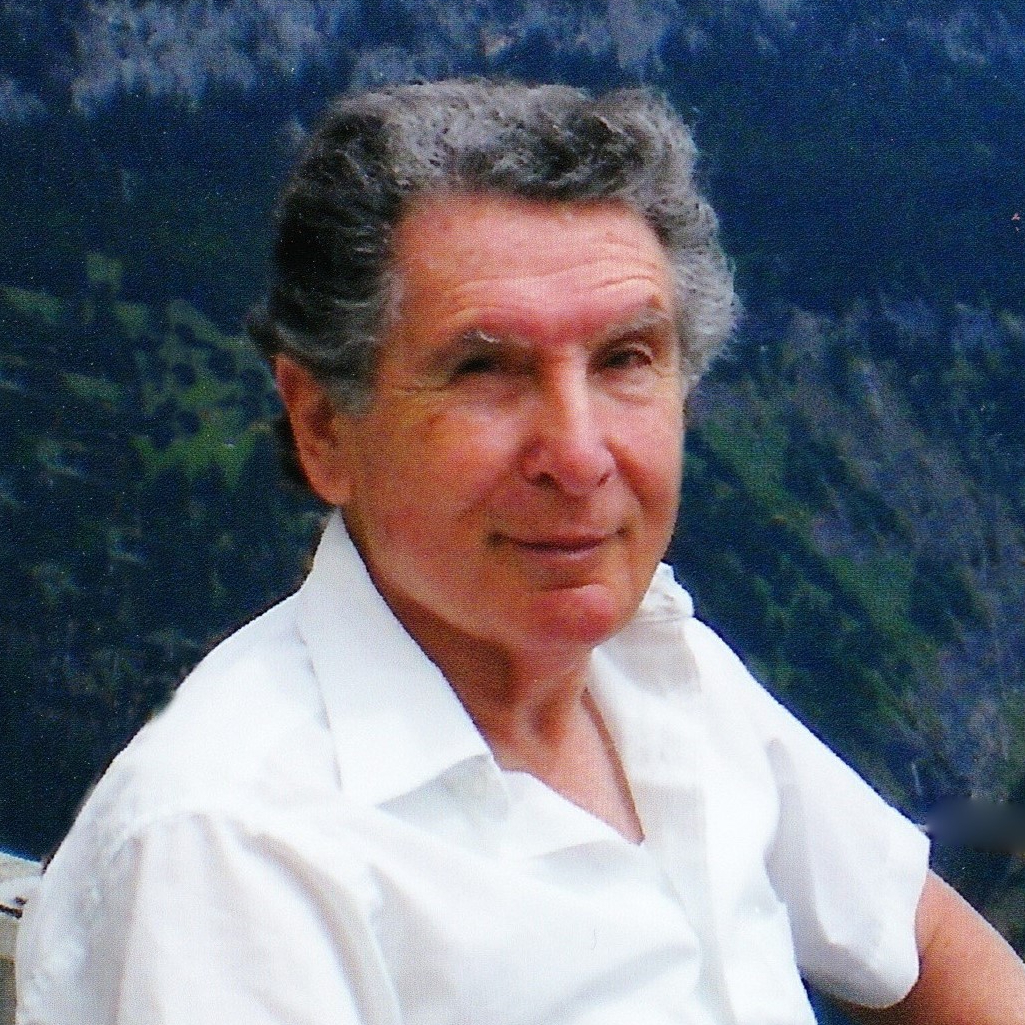
For The Illusion of Safety: The Story of the Greek Jews During the Second World War, by Michael Matsas (Second Edition, Vrahori Books, 2021)
I have created this supplemental guide as an introduction to the story of the Greek Jews during WWII and for further references and investigation after reading The Illusion of Safety.
With many thanks to my sister Ninetta Feldman, my daughters Linda Berger and Alice Garten, and my granddaughter Danielle Garten for their most valuable help.
- Introduction
- Index of important people, places and events covered in The Illusion of Safety.
- A Collection of Personal Stories
- Memoirs of Camp Survivors
- Memoirs of Resistance Fighters
- Bibliography
Introduction
The story of the Greek Jews during the Second World War is a very personal subject for me. My family lost 126 close relatives. If only they could have survived as my immediate family did. But, they did not. Throughout my life, I wanted to find out why the Greek Jews had been kept in the dark about the German plan to annihilate the Jews of Europe, why they knew nothing about the atrocities against the Jews that were taking place throughout German occupied Europe, and who was responsible for that.
I have continued reading and studying this subject, and twenty-four years after the publication of my first edition in 1997 (Pella Publishing Co.), I have revised and expanded the original edition, publishing it in 2021 (Vrahori Books).
The following two books, published after 1997, are two of the most important books that shed light on these questions:
- Official Secrets, What the Nazis Planned, What the British and the Americans Knew, by Professor Richard Breitman. He discovered that the coding system of the German Order of Police that dealt with the Jews had been broken by British Intelligence in September 1939. The British Intelligence knew everything the Germans were doing to the Jews. Page 14 in my book.
- The Abandonment of the Jews, by Professor David Wyman. He wrote, “The United States and Great Britain were deeply committed to a policy of NOT rescuing the Jews.” Page 14 in my book.
The war for Greece started on October 28, 1940, when Italy attacked Greece from Albania. The Greek Army defeated the Italians and occupied a third of Albania. The principal hero of this victory was the Jewish Colonel Mordechai Frizis. On April 6, 1941, Germany attacked Greece. The Greek generals capitulated, and the Greek army was demobilized.
The great famine of 1941 and 1942 in the big cities forced tens of thousands of Greeks to go to the countryside to exchange clothing or money and precious items for food. During the first years of the Italian German occupation, 1941 and 1942, the Greek Jews also were free to travel to the countryside to do the same. I believe that if the Allies did not remain SILENT and did not SAFEGUARD the German secret of the Final Solution, even the poorest Jews could have gone to remote mountain villages to exchange clothing for food. They could have remained there and possibly could have survived.
The deportations of the Greek Jews started in March 1943 when over 3 million Jews were already killed by the Germans. Deportations ended on July 20, 1944. The losses were enormous. It is estimated that more than 67,000 Greek Jews were deported and murdered in Auschwitz-Birkenau and Treblinka. Only 2,000 survived the death camps. More than 86% of the Greek Jews were killed by the bloodthirsty German murderers.
I believe that my book provides irrefutable evidence as to who is indirectly responsible for the destruction of Greek Jewry.
Below, I have indicated some highlights to guide the reader in their study.
Index of important people, places and events covered in The Illusion of Safety.
Professor Richard Breitman, author of Official Secrets: What the Nazis Planned, What the British and Americans Knew, p. 14.
Joshua Boettiger, a great grandson of President Roosevelt, became a Rabbi, p. 29.
Burton Berry, American consul in Istanbul, p. 26.
Michael Boyiadjoglou delivered to the American Consul in Istanbul, Burton Berry, the warning that the Jews of Corfu were going to be deported. The State Department classified the information as top secret and took no action. The Jews were deported 38 days later. I wonder who was the enemy of the USA, the Germans or the Jews? p. 29.
King Boris of Bulgaria – Yad Vashem removed the “Righteous Among the Nations” award he had received, when the true story of the survival of the 50,000 Bulgarian Jews became known, p. 93.
On Page 101, there is the story of a German agent Billy Horst who was captured by the partisans in the Greek mountains. He confessed, possibly by torture, that he was not a Jew as he claimed to be when he was arrested. He was executed in April 1944. In 2024, I read in the International Jerusalem Post that the partisans made a terrible mistake. Billy Horst was indeed a German Jew.
Corfu – The inaction of the State Department, that ignored the warnings sent by Consul Burton Berry, led to the death of 813 Jews of Corfu, pp. 18, 95, 127.
Archbishop Damaskinos, pp. 62, 65, 66.
- He wrote a formal protest letter against the deportations of the Jews of Greece and issued baptismal certificates for Jews.
- The German ambassador told Archbishop Damaskinos that the deportations “would expand to the rest of Greece”.
EAM (National Liberation Front) and ELAS (National People’s Liberation Army) Thousands of Greek Jews owe their survival to the partisans of ELAS. The British Colonel Christopher Woodhouse describes these organizations, p. 22.
Colonel Mordechai Frizis, the hero of the Greek-Italian war, pp. 19, 20, 361, 363, 364, 365.
General Geloso, the Italian general in charge of the Italian zone of occupation in Greece, decided not to apply the anti-Jewish laws which were imposed on the Jews of Italy under Mussolini, enabling hundreds of families to find safety in Athens, which was in the Italian zone of occupation, p. 98.
William Vanden Heuvel – In defense of President Roosevelt, he wrote the letter to the editor of the Washington Jewish Week titled FDR Did not Abandon European Jewry, p. 14.
Colonel Emil Jaeger – German Colonel who attempted to prevent the deportations of the Jews and how his actions impacted him personally, pp. 128, 129, 130.
Rabbi Tzevi Koretz, the chief Rabbi of Salonika, pp. 50, 85.
Joseph Matsas, a partisan, pp. 6, 69, 96.
Henry Morgenthau, Secretary of the Treasury, a formidable critic of the State Department, p. 30.
Ionas Mionis, a teacher and a leader of the resistance in Agrinion – He persuaded all the Jewish families, forty people, of Agrinion, the city where my immediate family lived, to flee to the mountains. The Jewish community of Agrinion, which is even mentioned in the German archives, is the only Jewish community in German occupied Europe that did not obey any German regulations and survived, p. 384.
Patra – Description of the heroic action of Mr. Wolfson, a German half Jew, pp. 95, 121. Most of the Jews of Patra survived.
Professor Theo Pavlidis – Professor Pavlidis shared that Matsas’ 2004 lecture transcript, which was delivered in Washington D.C, was visited by thousands of people on Pavlidis’ website. This inspired Matsas to publish the second edition of his book, p. 15.
John Pehle, director of the War Refugee Board, revealed that the State Department kept important information about the Holocaust from the American people, pp. 29, 125.
President Franklin D. Roosevelt, pp. 12, 14, 28, 29, 30.
Baruch Schibi, Greek Jewish resistance leader, conceived the idea of kidnapping Rabbi Ilia Barzilai of Athens and taking him and his family to the mountains. This action led the Jews of Athens to flee to the mountains or hide in the city, pp. 40, 103, 105.
Eduard Shulte, the German industrialist, who informed the Allies in August 1942 of the Final Solution, p. 24.
Rhodes – Kos The deportations of the Jews of the islands of Rhodes and Kos took place on July 20, 1944, only two months before the Germans withdrew from Greece. Thanks to the silence of Allies, the Jews of Rhodes and Kos remained in their homes as if waiting their turn to be killed by the Germans, pp. 95, 133.
Thessaloniki [also known as Salonika]: Prewar population 56,000; Survivors 1,950; Percentage of losses 96%, p. 39.
Volos: Prewar population 872, Survivors 645, Percentage of losses 26%. The resistance organization influenced this outcome, p. 95.
Professor David Wyman, author of The Abandonment of the Jews, p. 14.
Zakynthos: In the island of Zakynthos all of the 275 Jewish residents survived. It is claimed that the people of Zakynthos saved all the Jews. In my opinion, the Russians were coming and the Germans had no time to arrest any of the Jews of Zakynthos and Albania, pp. 133, 134, 135.
A Collection of Personal Stories
The book contains a number of personal stories. Each story is unique and could have been expanded into a book! The most moving stories are the story of Katy Torres, p. 195; the story of Dr. Menasse, p. 253; and the story of how the family of Colonel Frizis survived, p. 246. Here are some others:
- Anagnostopoulos remembers the tragedy of the Jews of Drama, p. 91.
- Five Jewish families from Thessaloniki were killed by the Germans in Meina, Italy on the shores of Lago Maggiore, p. 84.
- Something Inevitable: S. Perahia from Thessaloniki relates, p. 142.
- From Thessaloniki to Palestine: L. Sasson relates, p. 144.
- “The Slave Laborers”– Leon Levy from Thessaloniki relates, p. 145.
- “Would You Like to Be Saved?” – The story of how Dorin Adritti and Medi Florentin were saved by Dimitris Zaras and his friend, p. 148.
- “The Prisoners” – The story of the Italian diplomat, Emilio Neri, stationed in Thessaloniki, who saved Robert and Mimi Assael by sending them from his house to Athens accompanied by two Italian policemen, p. 148.
- “The Chambermaid” – The story of Ida Angel and her son who found shelter in the house of a Spanish diplomat until they were betrayed, p. 151
- How the Frizis family survived – The family survived thanks to a Greek collaborator of the Germans. It is not included in my book because I learned of it after the book was published. Following is the story as told to me by Iakovos Frizis, son of the Colonel, and published by the Hellenic News in July 2021. – “In Athens, an order was given for the Jews to register at the office of the Jewish community. I went there with my mother and two sisters. There were many desks with government employees, and people were lined up according to their last names. We went to the line for names beginning with the letter F. After my mother told the official our name, he asked, ‘Are you related to Colonel Frizis?’ My mother said, ‘He was my husband.’ The man immediately got up, stood at attention, and with great emotion in his expression and in his voice, he said, ‘I served under Colonel Frizis in the war. He was like a father to us. I cannot write your names in these German lists. Leave immediately!’ We went home and, before entering our house, we discussed what happened with our next-door neighbor Mr. Voyiatzis. He said, ‘If you are not registered, the Germans will not come here to look for you. In case they do, do not open the door. Go up to your terrace, jump the little wall that separates our terraces, and come down to my house.’ He was a good man. The Germans never came looking for us.” p. 246.
- Princess Alice of Greece saved her friends, p. 150.
- “You are born alone, you die alone.” The philosophy of a worker, p. 150.
- “Eighteen Months Indoors” – Rosa Pardo describes in her book the life of her family hiding in the house of a doctor in Thessaloniki. Just before the Germans left the city, her father, in the presence of a lawyer, transferred the four apartments the Pardos owned to the doctor. She concludes her story with the words, “After the Germans left, we were very poor and very happy,” p. 156.
- “A Difficult Choice” – The story of the family of Moshe Nahmias – They were about to be deported when they found out that Mrs. Nahmias, who was an Italian citizen before her marriage, could become an Italian citizen again if she divorced her husband. She did, and as an Italian citizen, she had the right to get her husband and her children out of the camp! They then managed to go all the way to Turkey, p. 162.
- The Mystery of the Fate of the 343 Jews of Crete – The Jews of Crete were placed on board the steamship Danais. The ship sank. No one survived. For years, nobody knew what or who caused the ship to sink until after 1997 when the British Admiralty admitted that the Danais was sunk by a British submarine, p. 168.
- In a Children’s Hospital – The story of Katy Torres, a five-year-old girl from Thessaloniki, who was in a hospital in Athens where she was being treated for bone tuberculosis, p. 195.
- “The Deal” – Maurice Soriano describes the “deal” he made with the Jewish interpreter and traitor Kosta Recanati to escape, p. 202.
- “Two Playboys” – Joseph Yohanas describes his and his brother’s adventures entering the German occupied city of Patras for fun! They were both arrested by the Germans, but managed to escape and return to the free mountains, p. 205.
- Watching and Waiting – The story of the family of Samuel Albalas of the city of Patras, who simply left their house and moved to the office of Mr. Albalas, p. 208.
- Innocent Brothers – Emmanuel Velelis of Patras describes how his two brothers were executed by the partisans, p. 210.
- “Shema Israel” – This is the story of my cousin Sam Meyer who escaped from the German camp in the city of Larissa. The partisans did not believe his story. They suspected he was a spy and decided to execute him. He was saved by a Jewish partisan, p. 214.
- Swimming to Freedom – Issak Koulias describes his adventures after his flight from the city, ending up in a boat that capsized in a storm as it was approaching Turkey. He was an excellent swimmer and managed to swim to the shore of Turkey and survive, p. 227.
- A Village Is Burning – This is the story of the German speaking Joseph Lovinger and his wife Berta of Athens: The Lovingers were used as interpreters by the Germans during the arrest of the Jews of Athens. On the day of the arrest, anyone who entered the synagogue was not allowed to exit. After a few hours, the Lovingers decided to escape. They told the guard they were tired. They would get a cup of coffee and come back. Instead, they went to the village of Tsakei where the partisans were helping Jews to cross the Aegean Sea to Turkey. The partisan Papasratis gave the Lovingers and the Hungarian Ambassador, whose wife was Jewish, first priority. A few days later the Germans burned all the houses of Tsakei, p. 189.
23. The story of Joseph “Iosif” Strumtsas, p. 172.
24. Author’s Personal Story – I started writing my story at age 14, in Greek, on the day my family and I returned from the mountains to the liberated city of Agrinion, in October, 1944. The title of my story was, “One Year in the Mountains.” That year in the mountains with the villagers, the partisans and even the German raids influenced my ideals of human rights, individual freedom, and the pursuit of happiness more profoundly than any school I ever attended. p. 355.
Memoirs of Camp Survivors
Close to 2,000 Greek Jewish men and women survived the camps. Each one of them has a unique story of survival. In my book I included the stories of the following people:
Dr. Albert Menasse – He played the flute and became a member of the men’s orchestra of Auschwitz. His daughter, Lillian, also became a member of the women’s orchestra. They both hoped to survive, p. 253.
Joseph Barouch – He was an officer of the Greek Army. He led the famous revolt of Birkenau on October 7, 1944, p. 269.
Solomon Benanton – He gave an eyewitness account of the revolt of Birkenau, p. 270-271.
Heintz Kounio – His entire family, his parents and his sister, survived the camps. This is the only Greek Jewish family to survive the camps, most likely because they knew German fluently, p. 271.
Daniel Carasso – When the Germans asked who was a doctor or a pharmacist, Carasso, falsely, said that he was a pharmacist. He survived along with Dr. Samouilidis and Dr. Kuenka, p. 276.
| Chaim Bensousan, p. 251. |
| Isaak Tivoli, p. 252. |
| Elias Matsas, p.260. |
| Rena Carasso, p. 265. |
| Alberto Moissi Errera, p. 261. |
| Michael Naoum Matsas, p. 262. |
| Alberto Levi, p. 278. |
| Berry Nahmia, p. 283. |
| Dr. Erricos Levi, p. 308. |
Memoirs of Resistance Fighters
Joseph Matsas – He was a graduate of the University of Thessaloniki in literature as well as a partisan. According to Joseph Matsas, there were 650 Jewish partisans in ELAS. They fought heroically alongside their Christian comrades. Many were killed or wounded. He fought in the battle of Karalaka, pp. 294, 295.
Lazaros Azarias – He was an agriculture specialist and one of the most important Jewish resistance leaders. He established a system of taxation by which provisions were collected for the partisans. After the war, he was condemned to death by the Nationalists. He escaped and went to Israel where he was employed as a worker by the famous TNUVA company. He rose through the ranks and eventually became the company’s director, p. 321.
| Lieutenant Marco Alberto Carasso, pp. 293, 322. |
| Lieutenant Yohanas Hatjis, p. 302. |
| Roberto Mitrani, p. 291. |
| Stella Kohen, p. 291. |
| Nikos Bourla, p. 291. |
| Leon Sakis, p. 300. |
| Lieutenant Samuel Askenazi, p. 311. |
| Armando Aaron, p. 311. |
| Benjamin Negrin, p. 314. |
| David Cohen, p. 321. |
| Abraam Bourla, p. 323. |
| Charles Carasso, p. 324. |
| Lieutenant Ben Porath, p. 325. |
| Fani Florenti, p. 327. |
| Meyer Levis, an officer. He was executed after the war, p. 338. |
| Louis Kohen, p. 341. |
| Leon Bourla and his children, p. 342 They are related to Dr. Albert Bourla, the CEO of the Pfizer Pharmaceutical Co. which produced the Pfizer vaccine for Covid 19. |
Bibliography
Anagnostopoulos, Dion. “The Final Solution” (in Greek), Athens: Chronika, 1988.
Apostolou, Andrew. The Holocaust in Greece. Edited by Giōrgos Antōniou and A. Dirk Moses. New York: Cambridge University Press, 2018.
Armaos, Athanasios. “Of the Greek Byzantine Catholic Church, letter to the editor.”
Asteriadis, Sarantis. “The Hell of the Jews of Rhodes” (in Greek), Athens: Chronika, 1979.
Averoff-Tossizza, Evangelos. By Fire and Axe: The Communist Party and the Civil War in Greece 1944-1949. New Rochelle, NY: Caratzas, 1978.
Black, Edwin. The Transfer Agreement: The Untold Story of the Secret Agreement between the Third Reich and Jewish Palestine. New York: Macmillan, 1984.
Bloch, Sam. Holocaust and Rebirth. New York: Bergen-Belsen Memorial Press, 1965.
Breitman, Richard. Official Secrets: What the Nazis Planned, what the British and Americans Knew. London: Penguin, 2000.
Clogg, Richard, and C. M. Woodhouse. The Struggle for Greece: 1941 – 1949. Oxford: Hurst Publishers, 2018.
Cornwell, John. Hitler’s Pope: The Secret History of Pius xii. New York: Penguin Group USA, 2008.
Donat, Alexander. The Holocaust Kingdom A Memoir. New York: Holocaust Library, 1999.
Dunstan, Helen. “Mandarins, Jews, and Missionaries. the Jewish Experience in the Chinese Empire.” The China Quarterly, 1981, https://doi.org/10.1017/s0305741000028186.
Enepekidis, P.K. The Secret Archives of the SS. Athens: Papazisis Publishers, 1969.
Eudes, Dominique. The Kapetanios: Partisans and Civil War in Greece, 1943-1949. London: NLB, 1972.
Farago, Ladislas. Patton: Ordeal and Triumph. Yardley, PA: Westholme, 1963.
Friedman, Philip, and H. G. Adler. Jewish Resistance to Nazism: Its Various Forms and Aspects. Oxford: Pergamon Press, 1960.
Geladopoulos, Philipas. Maria Dimadi. Nestoras: Athens, 1982
German Ministry of Transport. 17TRA, 1944.
Goldhagen, Daniel Jonah. Hitler’s Willing Executioners: Ordinary Germans and the Holocaust. New York: Vintage Books, 1997.
Hausner, G. Justice in Jerusalem, New York: HarperCollins, 1967.
Hilberg, Raul. The Destruction of the European Jews. Eastford, CT: Martino Fine Books, 2019.
Hilberg, Raul. Documents of Destruction. Chicago: Quadrangle Books, 1971.
Hoppe, Hans Joachim. “Greece and Its Neighbors” (in Greek). Chronika, December 1990.
Kalogiannis, E. “The Story of a Community President” (In Greek). Eleftheria Larissis: 1961.
Katz, Robert. The Battle for Rome. Deckle Edge, 2003
Kondylakis, N. “Heintz Kounio, The only case of the survival of an entire family in Auschwitz.” Athens: Chronika, 1982.
Levin, Nora. The Holocaust: The Destruction of European Jewry 1933-1945. New York: Schocken Books, 1973.
Lovinger, Joseph. “President of the Jewish Community of Athens letter to the author.” 1989.
Matarasso, J. A. …And Yet All of Them Did Not Die (In Greek). Athens, 1948.
Matsas, Joseph. “Lecture in Greek,” Journal of the Hellenic Diaspora). Vol. 17, 1991.
Matsas, Michael. “Jewish contributions to Civilization” (in Greek). Athens, Greece: Jewish Review, 1966.
Matsas, Michael Naoum. “Uncle of the author, ‘An Act of Defiance’ Letter to the author.” 1976.
Mazower, Mark. Inside Hitler’s Greece: The Experience of Occupation, 1941-44. U.S.: Yale Nota Bene, 2001.
Menasse, Albert. The Story of Inmate 124454 (In Greek). The Jewish Community of Thessaloniki Typos: Ellinismou, 1974.
Molho, Michael. In Memoriam, Jewish Community of Thessalonikiin Greek.
Montegue, July. Where God Stood in the Holocaust.
Moridis, Theodoros. “The Inside Story of the Damaskinos Letter of Protest” (In Greek). Kathimerini, reprinted by Chronika, September 1988.
Morse, Arthur David. While Six Million Died. New York: Random House, 1968.
Nachman, Eftihia. Yannina (In Greek). Talos Press: Athens, 1966.
Nathaniel, M. “Letter to Michael Matsas in the Museum of Jewish Heritage.” New York: BBC, 1975.
National Archives, “Cairo Egypt, No 86, Communication from Ambassador Lincoln Mac Veagh to Secretary of State.” REC-435.
Novitch, Miriam. Le Passage des Barbares: Contribution à L’histoire de la Déportation et de la Résistance de Juifs Grecs. Ghetto Fighters House, 1982.
Nyiszli, Miklós, Tibère Kremer, Richard Seaver, and Bruno Bettelheim. Auschwitz: A Doctor’s Eyewitness Account. Eastford, CT: Martino Fine Books, 2020.
“Records of the War Refugee Board, 1944-1945: Franklin D. Roosevelt Presidential Library & Museum.” FDR Presidential Library & Museum. Accessed June 18, 2023. http://www.fdrlibrary.marist.edu/archives/collections/franklin/index.php?p=collections%2Ffindingaid&id=534.
Sarafis, Stefanos. Greek Resistance Army. London: Humanities Press, 1981.
Sarantidis, Antonios. “Who Prepared the Holocaust in Thessaloniki,” New York: Chronika, April 1981.
Stavrianos, L. S. The Balkans. New York, Simon and Schuster: New York, 1968.
Teller, Hanoch. “Unfashionable Causes.” Jerusalem Post, November 1993.
Tenenbaum, Baruch. “Happy 108th Birthday, Mr. Wallenberg.” International Jerusalem Post, August 2020.
Tenorio, Rich, ToI Staff, Carrie Keller-Lynn and ToI Staff Michael Bachner, Renee Ghert-Zand, Amy Spiro, Jeremy Sharon, Sue Surkes, et al. “Little Known Philippines’ WWII Rescue of Jews Was Capped by US Interference.” The Times of Israel, February 20, 2020. https://www.timesofisrael.com/little-known-philippines-wwii-rescue-of-jews-was-capped-by-us-interference/.
Tugend, Tom. “Holocaust Evidence Hidden.” Washington Jewish Week, 1993.
Vafiadis, Markos. Apomnimonevmata. Athens: Nea Synora, 1985.
Venezis, Elias. “Archbishop Damaskinos.” Chronika. New York: April 1982.
Willis, Yolanda Avram. A Hidden Child in Greece Rescue in the Holocaust. Bloomington, IN: AuthorHouse, 2016.
Wyman, David S. The Abandonment of the Jews: America and the Holocaust, 1941-1945. New York: The New Press, 2007.
“Yad Vashem Archives.” Yad Vashem, The World Holocaust Remembrance Center, 2023. https://www.yadvashem.org/archive.html.
Zuccotti, Susan. The Italians and the Holocaust: Persecution, Rescue and Survival. London: Peter Halban, 1987.
 The Illusion of Safety